M Acuff + Özge Serin
STARLING is a monthly electronic missive co-authored by Özge Serin and M Acuff. You’re receiving it because we thought you’d like it. Our desire is to craft a series of short offerings, of things we’re into, have found enthrallment with, or are just mulling over. Our musings engage with things new and old, local and at a far remove, spatially and temporally; against the daily deluge of stimulus these are a few items we are holding close.
This name STARLING implies a community of synchronous correlated intelligence and more-than-human wisdom, which we are imagining into being.
We hope you will enjoy!
On Charles Ray’s Two Horses at the Met:
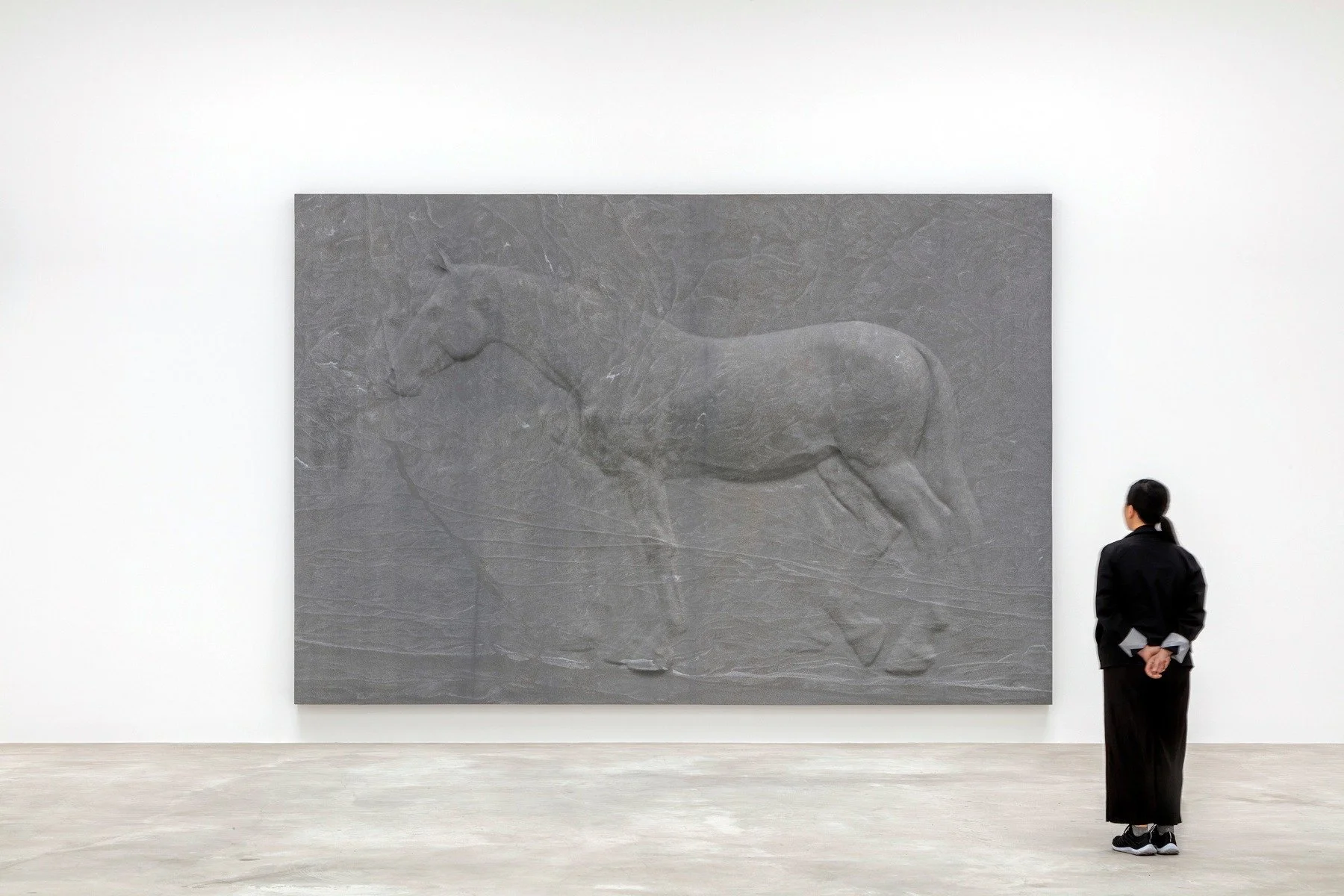
Two Horses, granite, 10x14x8’ granite, 2019
It is difficult to see a sculpture. In this one, the wrestling match between image and object is ongoing. Four legs. Eight. Maybe ten. According to Jung, circle, animal, and stone are the original symbolic categories. Three. In every venn diagram the intersection between the two circles is called the vesica piscis, or fish’s bladder. In the venn diagram of granite and muscle, the vesica piscis is where sculpture lives. Is a headstone not also a bodystone? Flankstone should definitely be a word. Oscar Wilde says that all art is about sex or death; the best art always surfaces both.
See more views of Two Horses on Instagram here.
Film of the Month — Persona:
Ingmar Bergman’s Persona (1966) opens not with its story, but with the apparatus that will tell it: a carbon arc igniting, leader film, countdown numerals, and then a sequence of fragments—an erect penis, a slapstick skeleton, a spider, a lamb being slaughtered, a hand being nailed, faces in a morgue. A boy wakes among the corpses, opens a book, and reaches toward the oscillating image of a woman’s face that will not resolve. Only then does the film proper begin, with its ostensible subject: Elisabet Vogler, a famous actress who falls silent mid-performance of Electra and is sent, under the care of a young nurse, Alma, to a remote cottage where the boundary between the two women progressively dissolves.
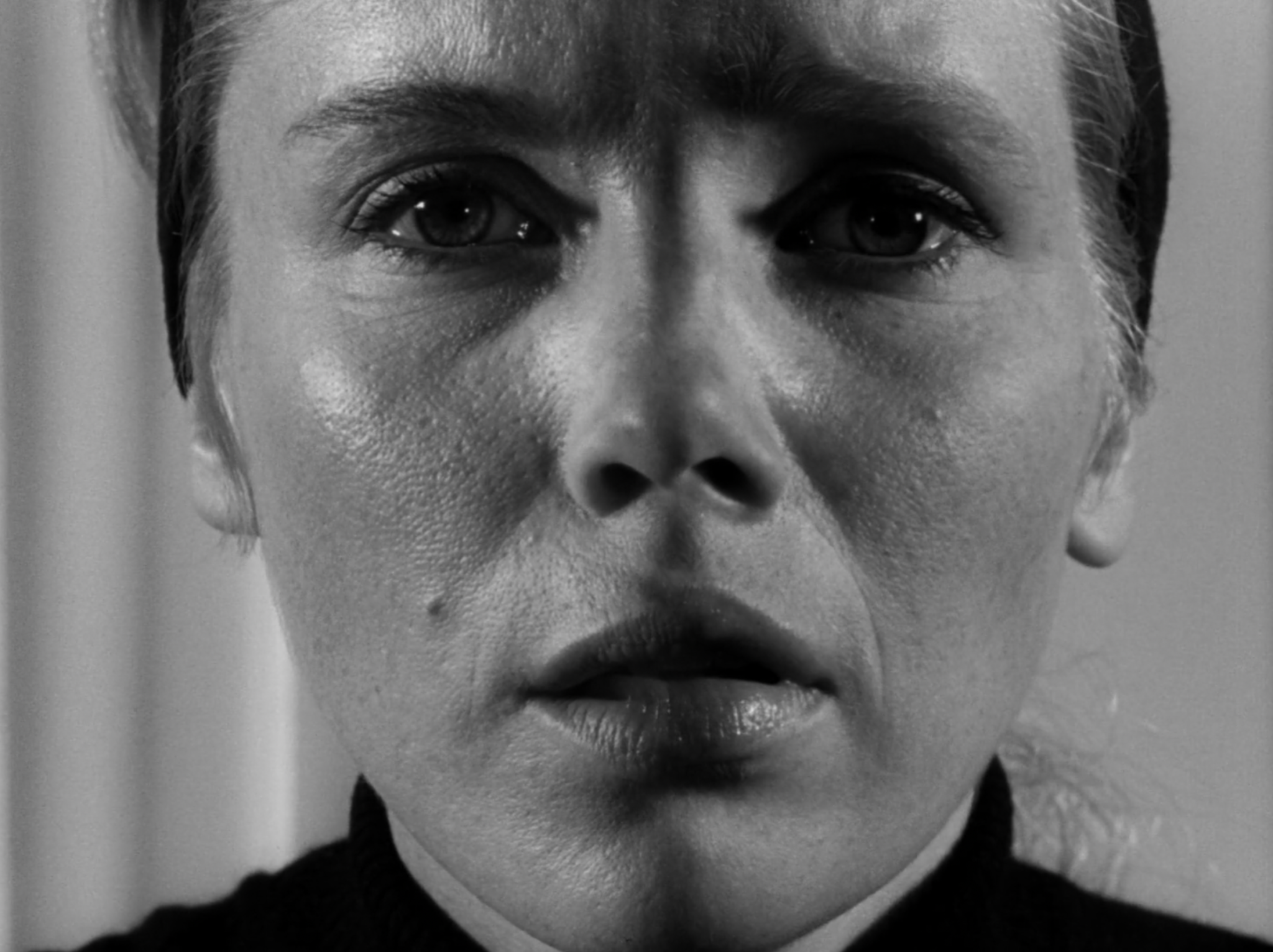
The uncertainty of where one woman ends and the other begins gathers around the film’s most striking formal devices: the fused face and the doubled monologue. These scenes do not simply show two women becoming confused with one another; they make it unclear whose psychic life we are watching. The composite face, made from one half of Alma and one half of Elisabet, appears whole only by revealing a fracture. It does not stabilize identity; it makes the instability of identity visible. The doubled monologue does something similar at the level of voice. Alma narrates Elisabet’s rejection of her son twice, once while the camera holds Elisabet’s face and once while it holds Alma’s. The words remain the same, but they cannot be anchored to any stable enunciative subject. Is Alma accusing Elisabet, speaking for her, identifying with her, or becoming the place where Elisabet’s disavowed maternity returns?
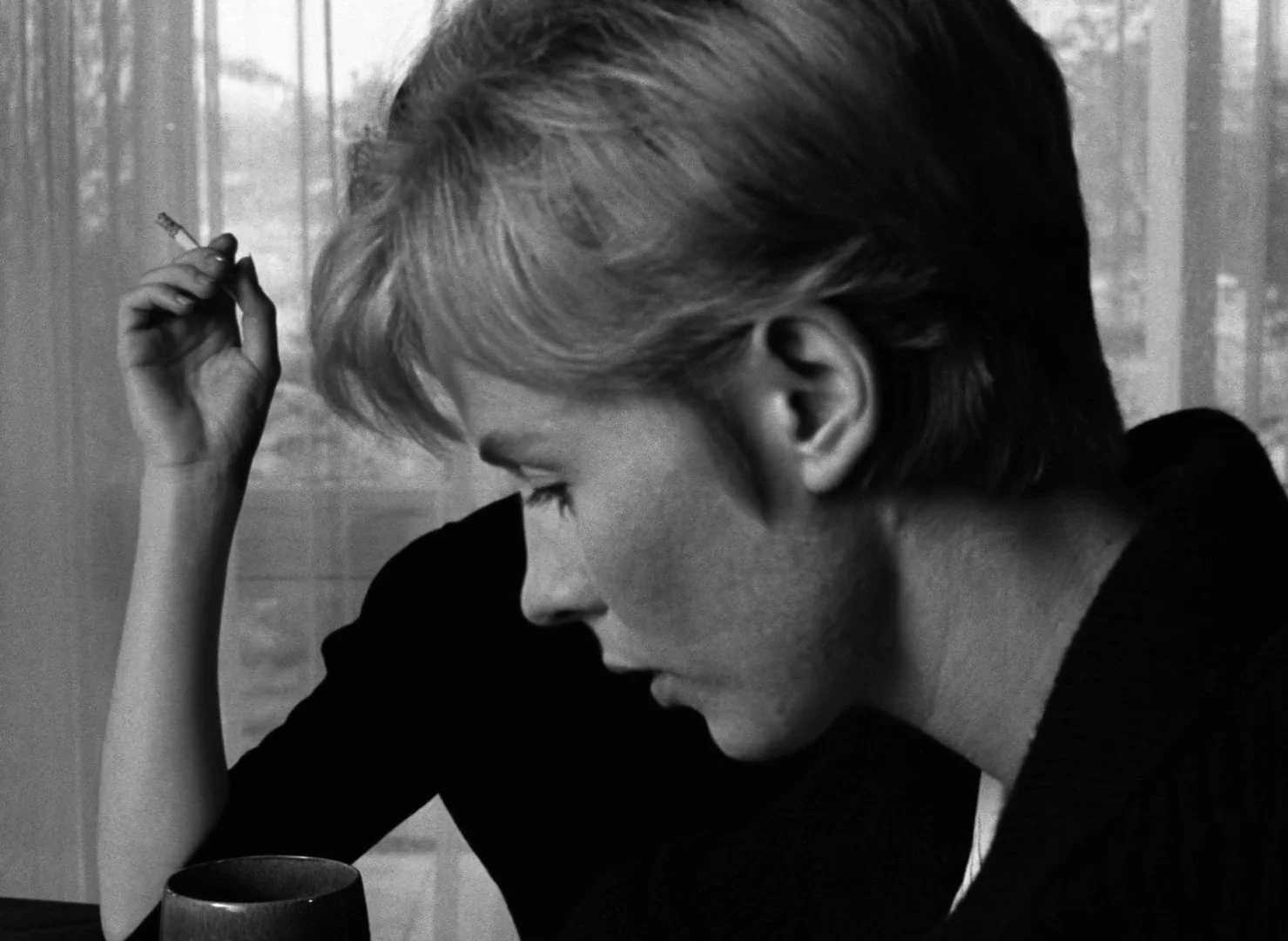
Projective identification gives this ambiguity its psychic logic. Alma and Elisabet do not remain bounded subjects who simply speak and listen to one another. Elisabet’s silence is not empty; it acts. It draws speech out of Alma and creates an intimacy in which confession becomes exposure. Alma’s confessions—the beach orgy, the abortion, her anger at her engagement and at the respectable life expected of her—seem to leave her and gather in Elisabet’s silence. What Alma cannot fully contain in herself is lodged in the other woman, who becomes charged with what has been deposited there. But because Elisabet does not speak, nothing is returned in a metabolized form. The material remains suspended between them until it comes back as persecution. This is why the letter scene is so devastating. Alma discovers that what she experienced as intimacy may have been observation, that the silent listener may have been studying her all along. Elisabet, once idealized as the good object—receptive because she listens, withholding because she refuses to speak—becomes contaminated by betrayal. Alma’s rage is not simply a reaction to being mocked; it is the violent return of what had been split off, placed in Elisabet, and then encountered as hostile. By the time Alma offers her blood and Elisabet drinks, the film has literalized what has been happening all along: one woman is being emptied into the other.
The intimacy between Alma and Elisabet becomes aggressive because nothing holds the two women apart. There is no stable third term in the cottage: no child, husband, doctor, work, or social world strong enough to mediate its closed circuit. In such an imaginary dyad, the other is never only a beloved or desired mirror; she is also a rival, captor, and possible replacement. The fused face makes this visible. It is not simply an image of psychological merging, as if the two women had become one. It is a cinematic image of mutual capture, in which the distinction between self and other can no longer be secured. The other who seems to confirm the self also threatens to occupy its place. The terror of the image is that it gives the viewer no secure position outside the dyad from which to tell one face from the other.

One cannot finally tell where the film is taking place psychically. Is the cottage sequence part of Elisabet’s internal world, Alma’s, or a shared hallucinated space produced between them? Did the encounter at the cottage really happen, or does the film return us at the end to the hospital as if the entire middle section had been dream, fantasy, projection, or analytic scene? Late in the film, Alma and Elisabet appear again in a bare hospital-like room, restored to the roles of nurse and patient, and Alma makes Elisabet repeat the word ingenting—“nothing.” That moment unsettles the reality-status of everything that has preceded it. It returns the women to their original positions, but only after the film has made those positions impossible to trust.
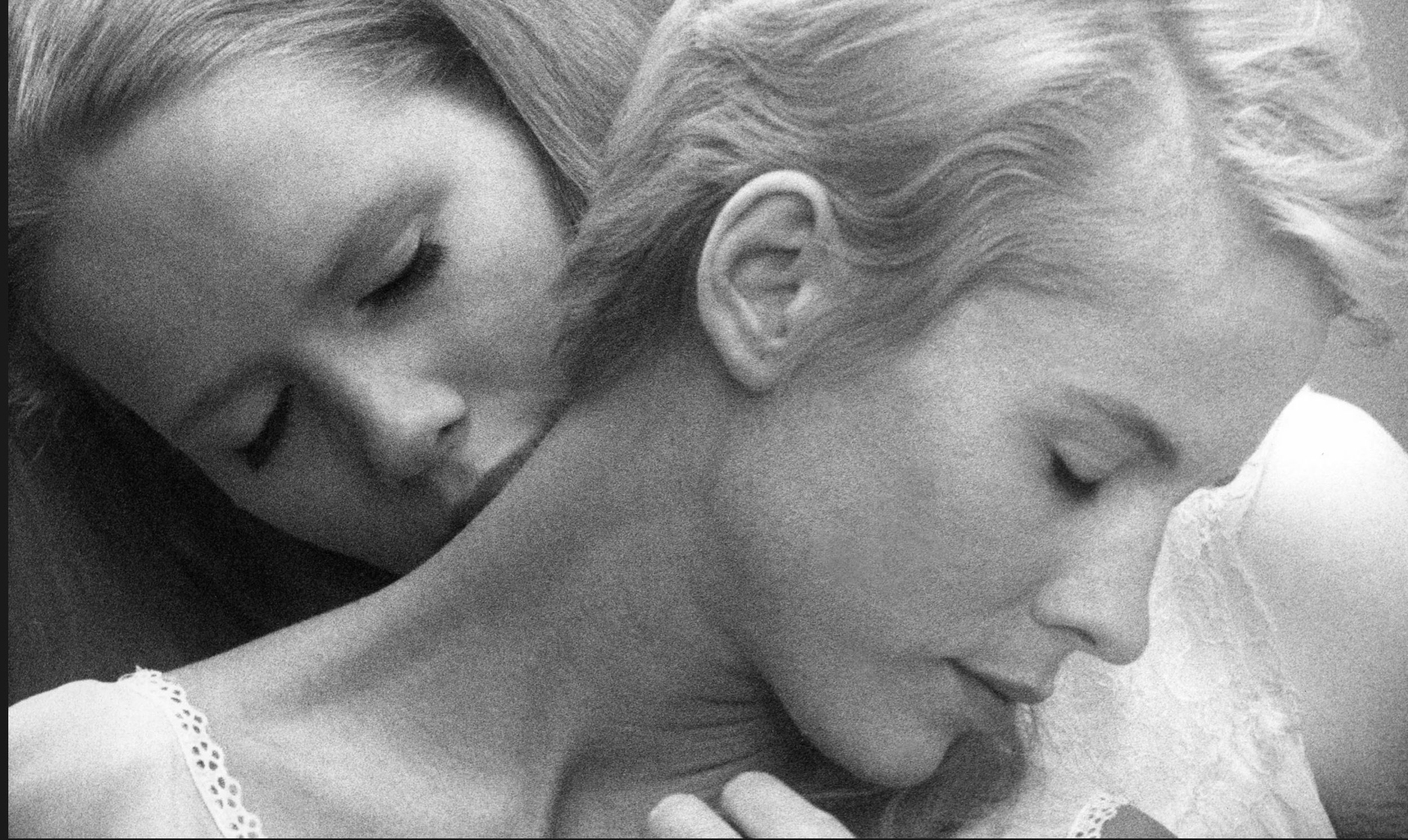
But the film itself refuses to settle the question. It does not give us an unconscious behind the image, waiting to be decoded. It gives us an unconscious that becomes legible only through the image’s breakdowns, substitutions, doublings, and burns. The film asks whether psychic life can be represented at all, or whether it can only appear through fictive forms that fracture as they try to bear it. In doing so, Persona turns film form into analytic form—not a surface beneath which psychic truth is hidden, but the fictive site of its appearing.
Reverie #3: What would you do with a lifelike doll of your mother? Aneta Grzeszykowska’s MAMA
A girl carries her mother through a field. She drags her, props her up, paints her face, washes her, buries her, gives her a cigarette. I keep thinking about Hanna Segal while I look at Polish photographer and sculptor Aneta Grzeszykowska's MAMA series, in which the artist photographs her daughter playing with a silicone, hyperreal cast of her own head and torso.
In “Notes on Symbol Formation,” Hanna Segal argues that symbolization develops alongside object relations and changes as the ego matures. In the paranoid-schizoid position, where splitting and projective identification dominate, the earliest “symbols” are not yet symbols in the full sense. They are what Segal calls symbolic equations: the substitute is not felt to represent the object, but to be it. Because self and object are not yet securely differentiated, symbol and symbolized object are not securely differentiated either. This is why concrete or psychotic thinking treats words, things, and images as though they were literally identical with the feared or desired object. In the depressive position, by contrast, the object can be recognized as whole and separate, ambivalence and loss can be tolerated, and the substitute no longer has to be identical with the original object. At that point, symbol proper becomes possible: the symbol can stand for the object while preserving difference from it. That is what opens the way for sublimation, creativity, communication, and thought.
Grzeszykowska’s photographs seem to test this fragile distinction between symbol and thing.
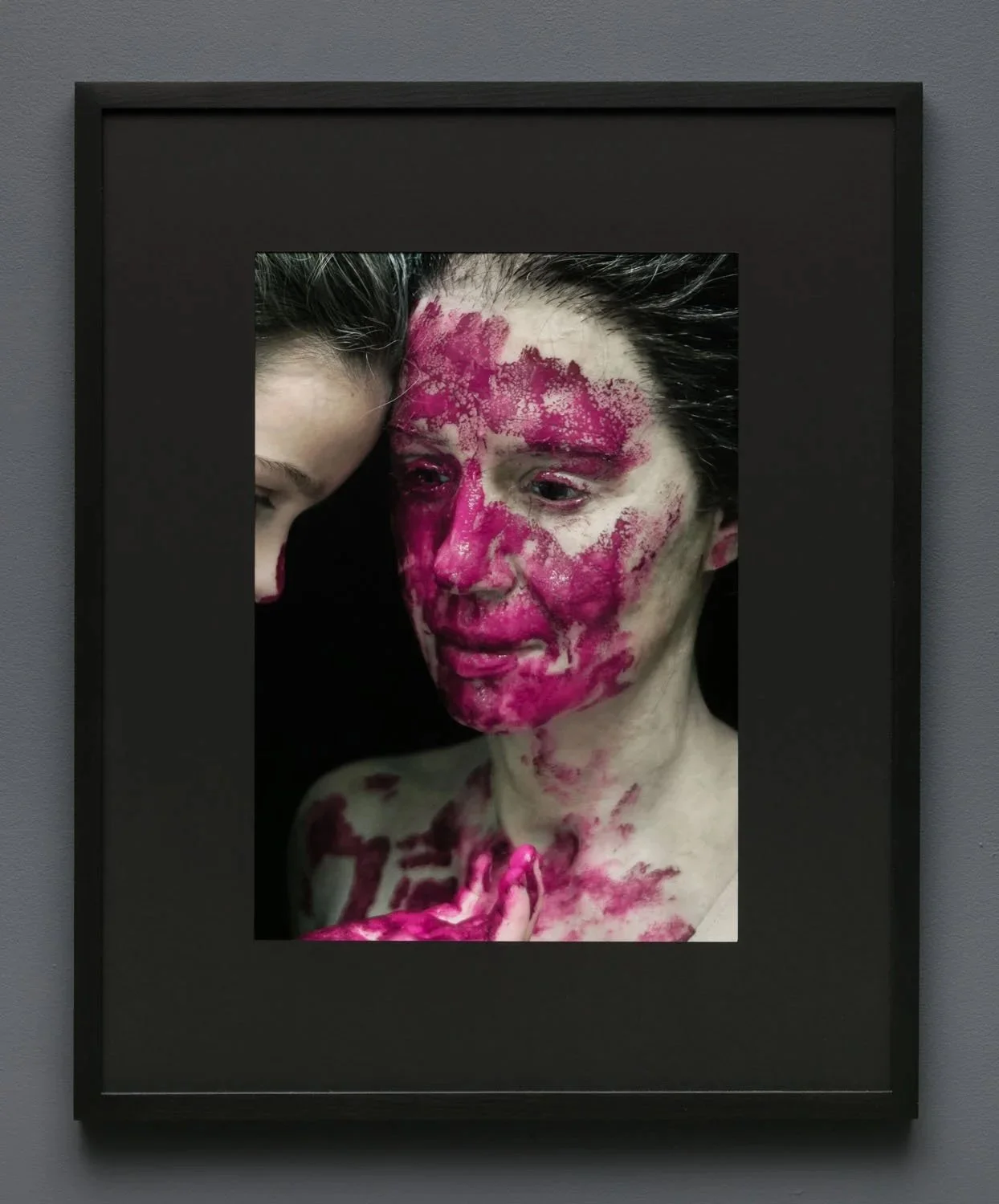
In MAMA #27, the maternal bust is being painted. What stands out here is not substitution of identities so much as the treatment of the maternal face as a surface: something that can be marked, altered, cosmetically transformed, worked on. The image is uncanny because the bust is clearly a representation yet still too close to the mother’s body to feel like a neutral stand-in. The painted surface hovers between symbol and symbolic equation.
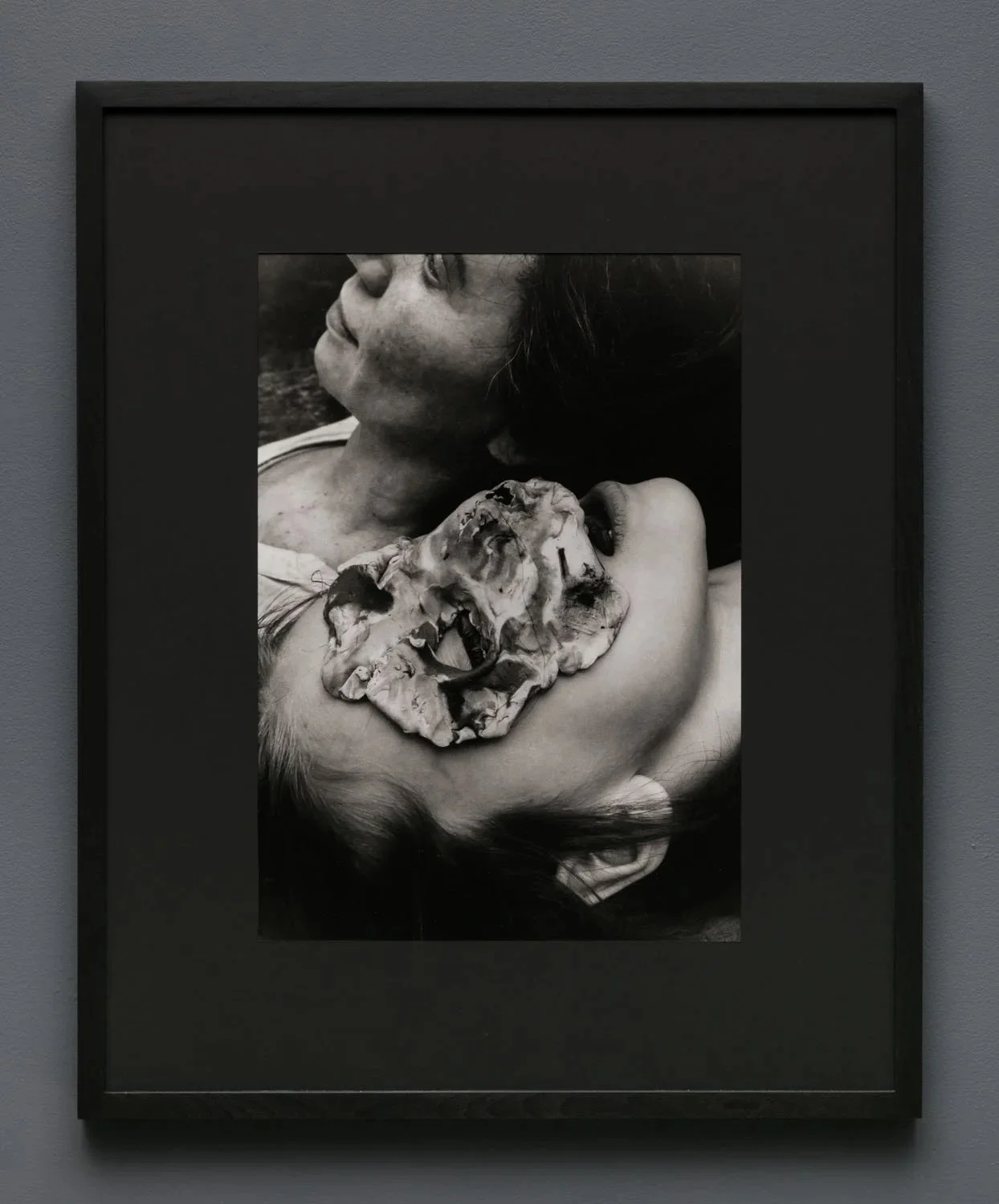
In MAMA #22, the issue is no longer surface alteration but a much more radical instability of face and identity. The child’s face is paired with or overlaid by a grotesque mask, while the maternal face is present alongside it. Mother, child, mask, and representation begin to slide into one another. This is the strongest image for symbolic equation because it becomes difficult to tell what stands for what, or who is replacing whom.
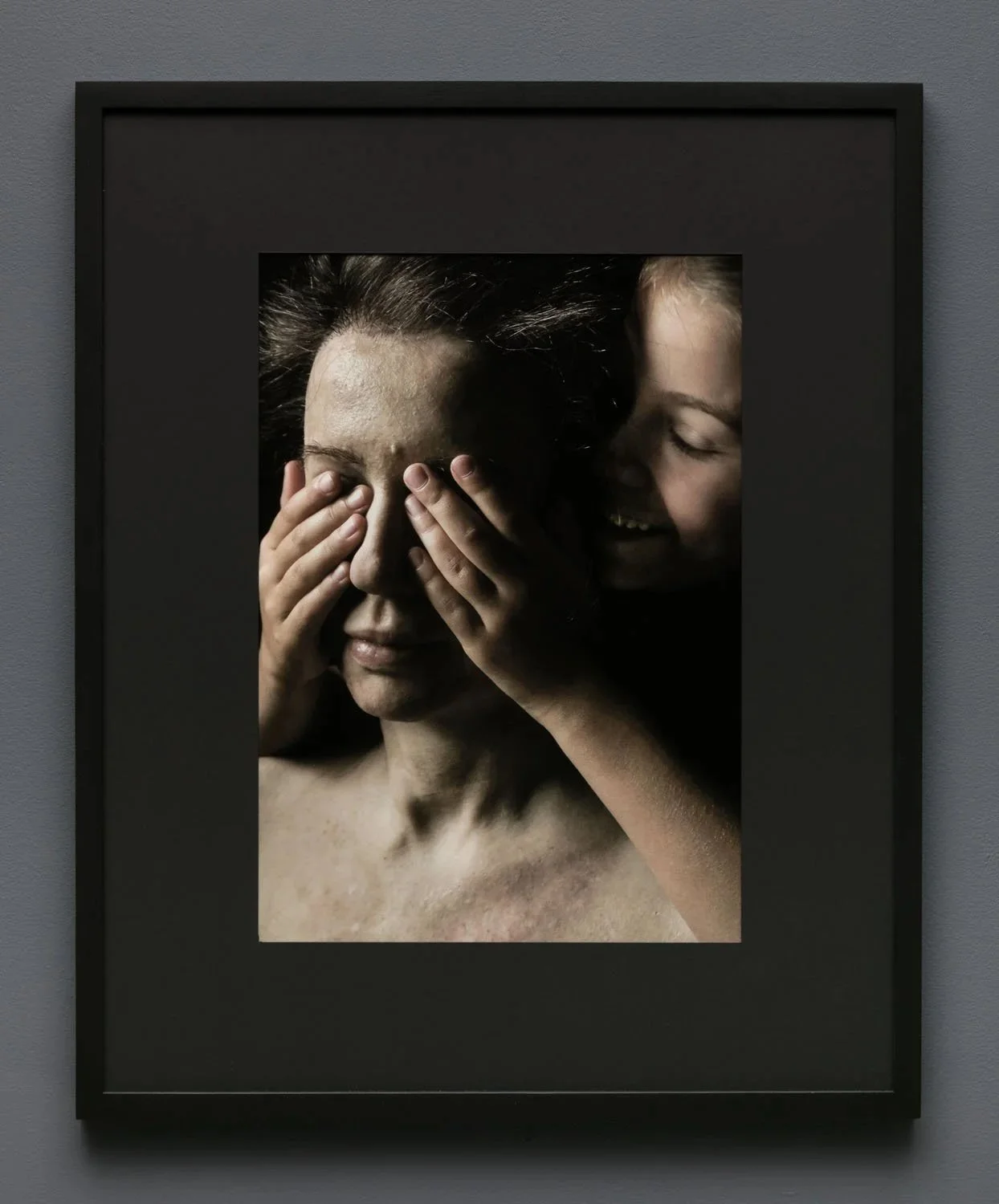
In MAMA #32, the emphasis shifts to the maternal gaze. The crucial gesture is the covering of the mother’s eyes. Is the child protecting the mother, blinding her, suspending her as a perceiving subject, or mastering the fact that the mother can look back? The image draws close to symbolic equation insofar as the bust is treated not as a symbol of the mother, but as the mother’s very presence — as though acting on the eyes were acting directly on the mother herself.
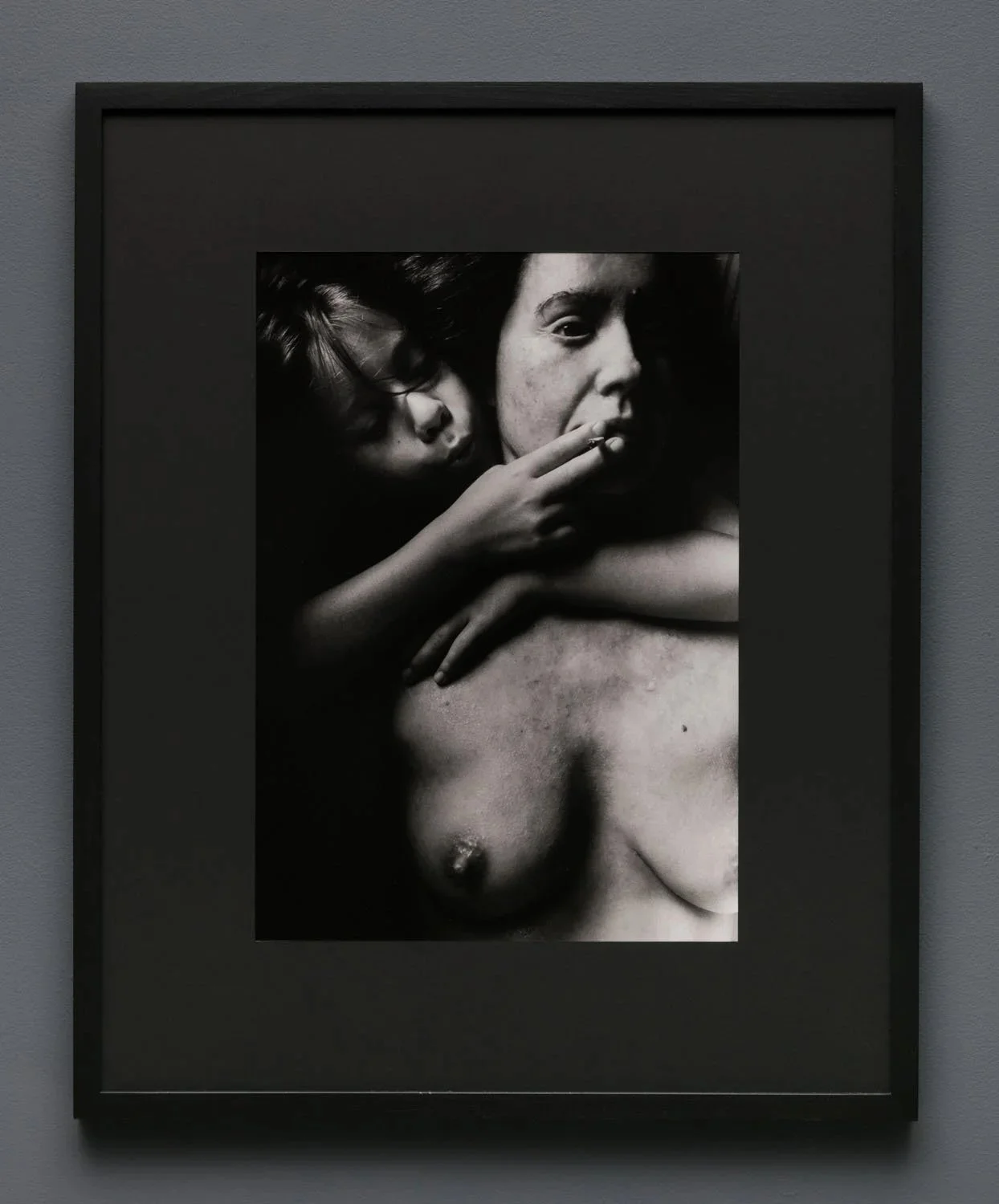
In MAMA #34, the maternal bust is given a cigarette. The sculpture is not merely altered or controlled, but animated, staged as though it could smoke, pose, or participate in adult social life.
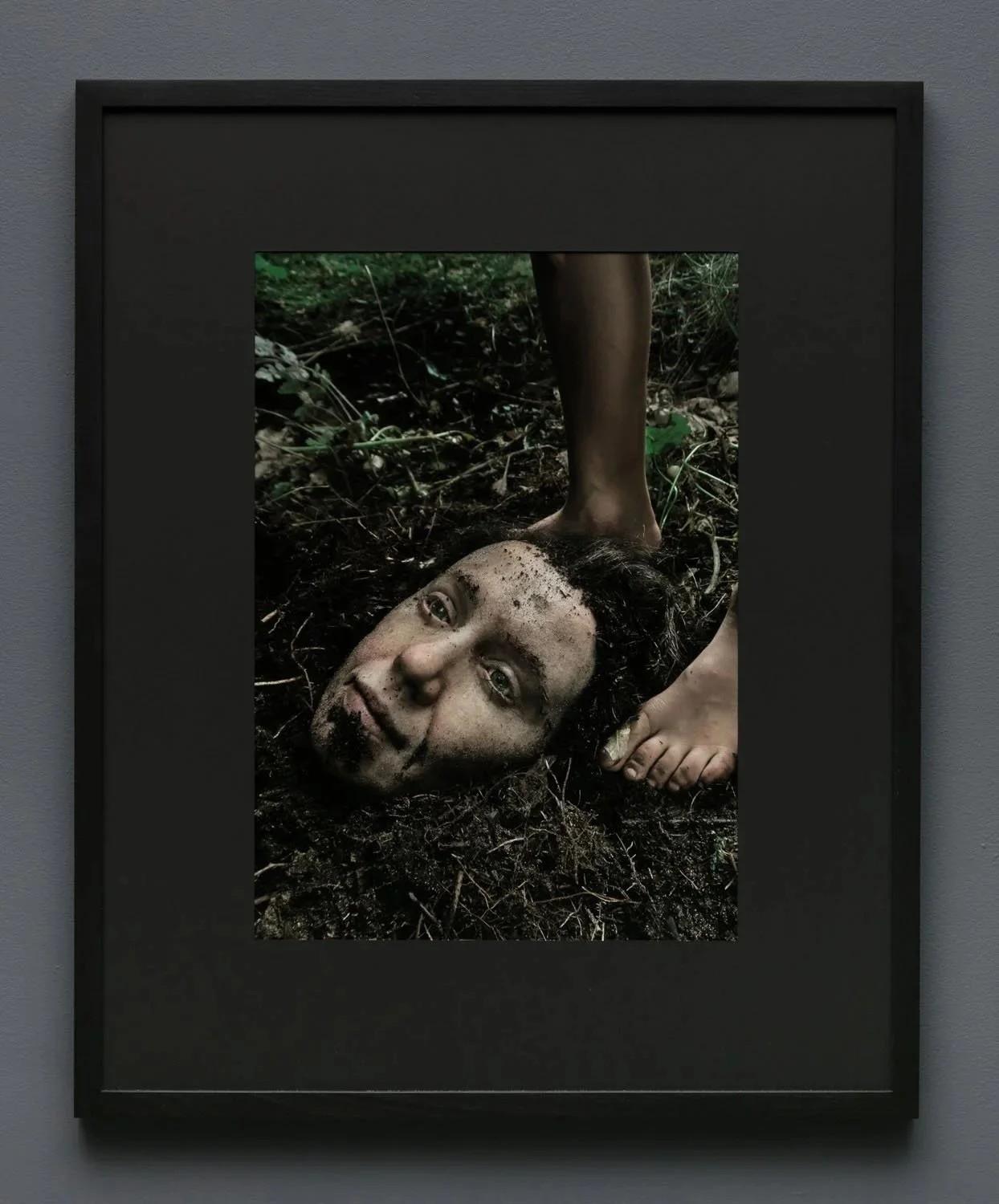
In MAMA #50, the mother’s head remains visible above the ground, so the object is neither wholly absent nor fully annihilated. What the image stages is not the omnipotent fantasy of disposing of the object, but the depressive recognition that the attacked object is also the loved object—damaged, enduring, and not without claim. The image thus approaches symbol proper: the maternal figure is no longer treated as identical with the fantasy enacted upon it, but as a separate object whose loss can be registered, whose survival can matter, and toward which concern, mourning, and reparation begin to emerge.
MAMA is not only concerned with the child’s ambivalent relation to the maternal object. It also stages the fragile achievement of symbolization — the difficult passage by which an image comes to stand for the mother without collapsing into her. Grzeszykowska makes her own double and gives it to her daughter to play with — but she's also behind the camera, turning that play into her own staging, her own work. So who is this gift really for?
All images via Lyles and King
On kinship and plastic:
“The ego is first and foremost a bodily ego; it is not merely a surface entity, but is itself the projection of a surface.” - The Ego and the Id
We were 2 bodies in the Arctic. Both full of air. Ordovician stone above and below.
On an island that floated the ocean north, ancient equatorial forests
crushed into black gold, now everywhere flying into sky.
What does it mean to rely in unfathomably complex ways on a countless number of other beings?
My shadow, small and wiggly, crumpled against earth.
Minerva’s plastic owl, breathless, crinkled against me.
The necessity of collapsing self and other. The perversity of being and not being, held.
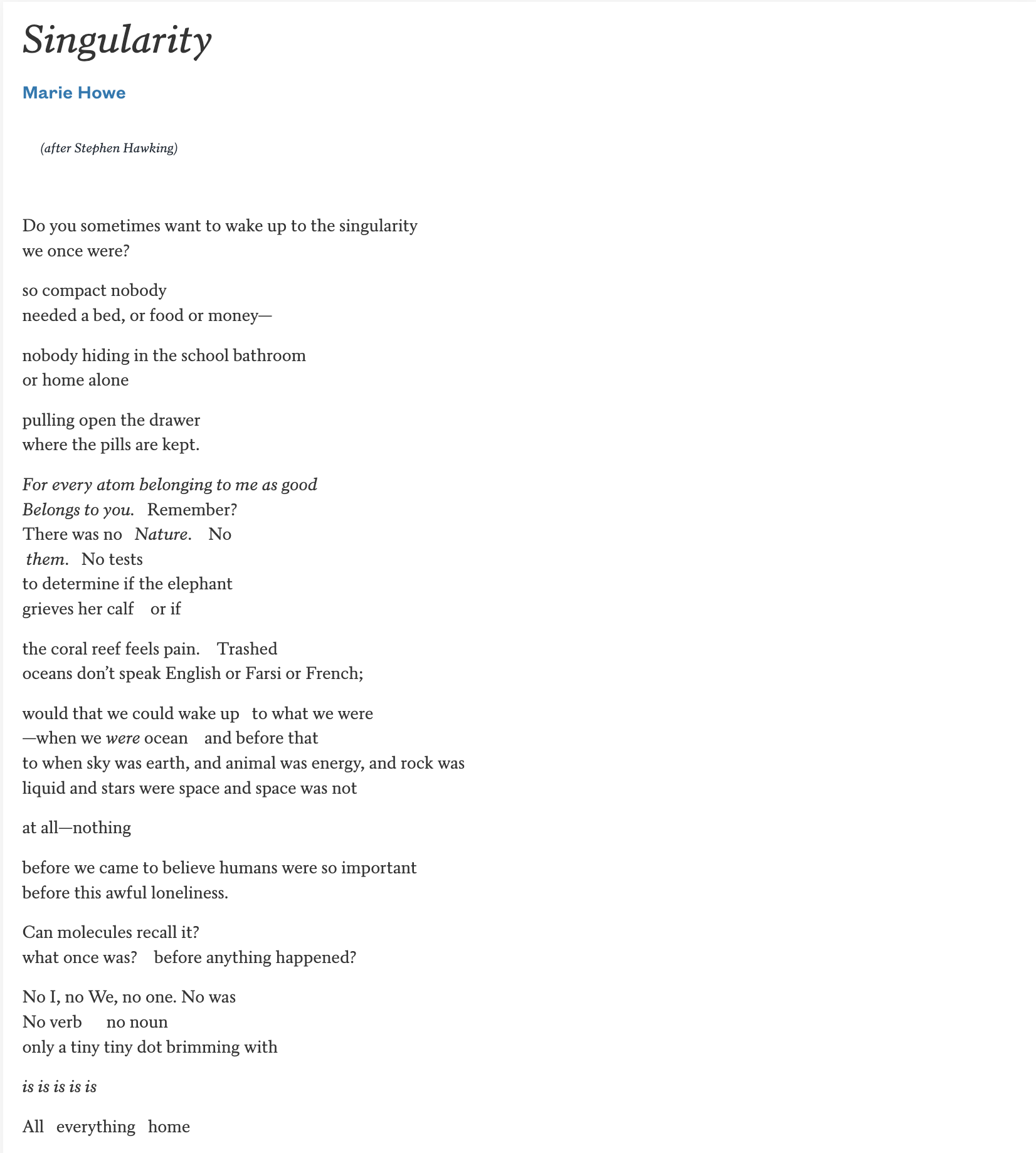
2+2=5: part of our practice in creating STARLING is to allow for the 4 things gathered here to spontaneously generate a 5th thing. This month’s 5th thing is Singularity by Marie Howe:
This issue of STARLING is dedicated to M’s mom, Carolyn Acuff, who passed away on May 9, 2026 at age 83. She was a force of love.
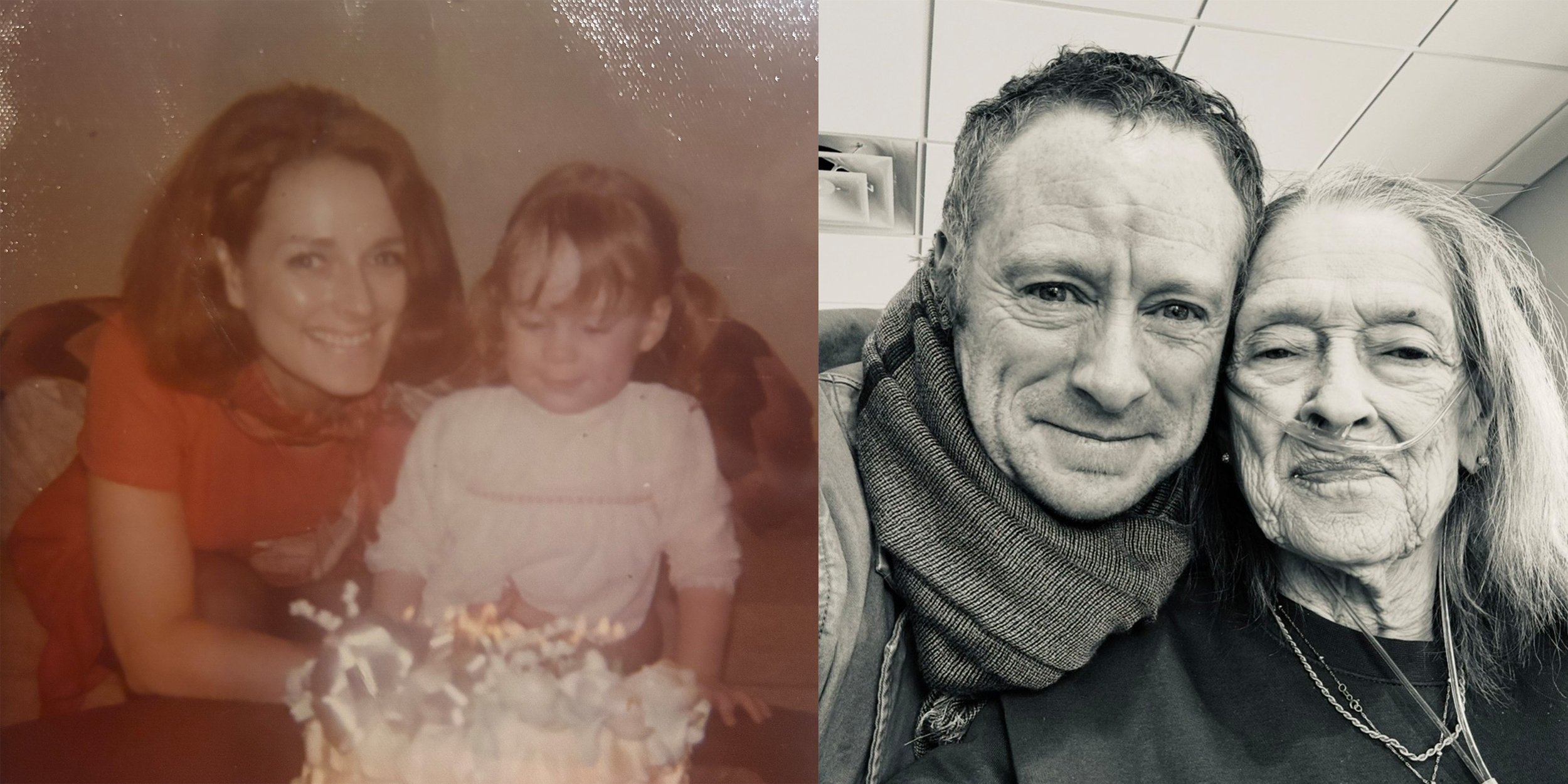
Carolyn and M, 1971 and 2026
Send STARLING to a friend!